

🥟 Asian Foresight
Decoding the state of futures thinking and foresight in Asia
The strategic challenge for every leader (in business, governments, or at home 😵💫) is captured by one common sentiment: The world is changing faster than we can adapt.
As well as this poly-crisis mentality…
In recent years, the future has come to feel less like a promise and more like a warning. As my friend Liam Young says, it’s as if we are trapped in a live-action disaster movie, where crisis has become the dominant plot line.
Honor Harger, VP, ArtScience Museum, Singapore
This essay is inspired by Another World is Possible, an exhibition held at the ArtScience Museum in Singapore. It champions futures that are plural, situated, and grounded in local culture, ecology, and place, shifting the focus from dystopian prediction to active resilience – rooted in Asian culture.
This got me very curious:
Is futures thinking universal?
How does cultural nuance define the practice itself? How is it understood, consciously and subconsciously? How is it manifested and embodied in modern and ancient culture? Who are the key agents or actors?
How can we understand ‘Asian foresight’?
I propose the following six pillars as a framework to decode the state of futures thinking and foresight in Asia, and to use this as a conversation starter to move beyond assumptions of ‘universality’ and ground futures thinking in unique cultural dynamics in Asia – nudging foresight towards a plural, situated practice.
PILLAR ➊ Institutional Foresight
PILLAR ➋ Pop Futures
PILLAR ➌ Silkpunk, Spicepunk, Islandpunk
PILLAR ➍ Reimagined Urbanism
PILLAR ➎ Ancient Futurism
PILLAR ➏ Futures Literacy
Is this radical?
This is by no means the only way to study this topic. I’d love to learn about different points of views. Please leave a comment or DM me ☻
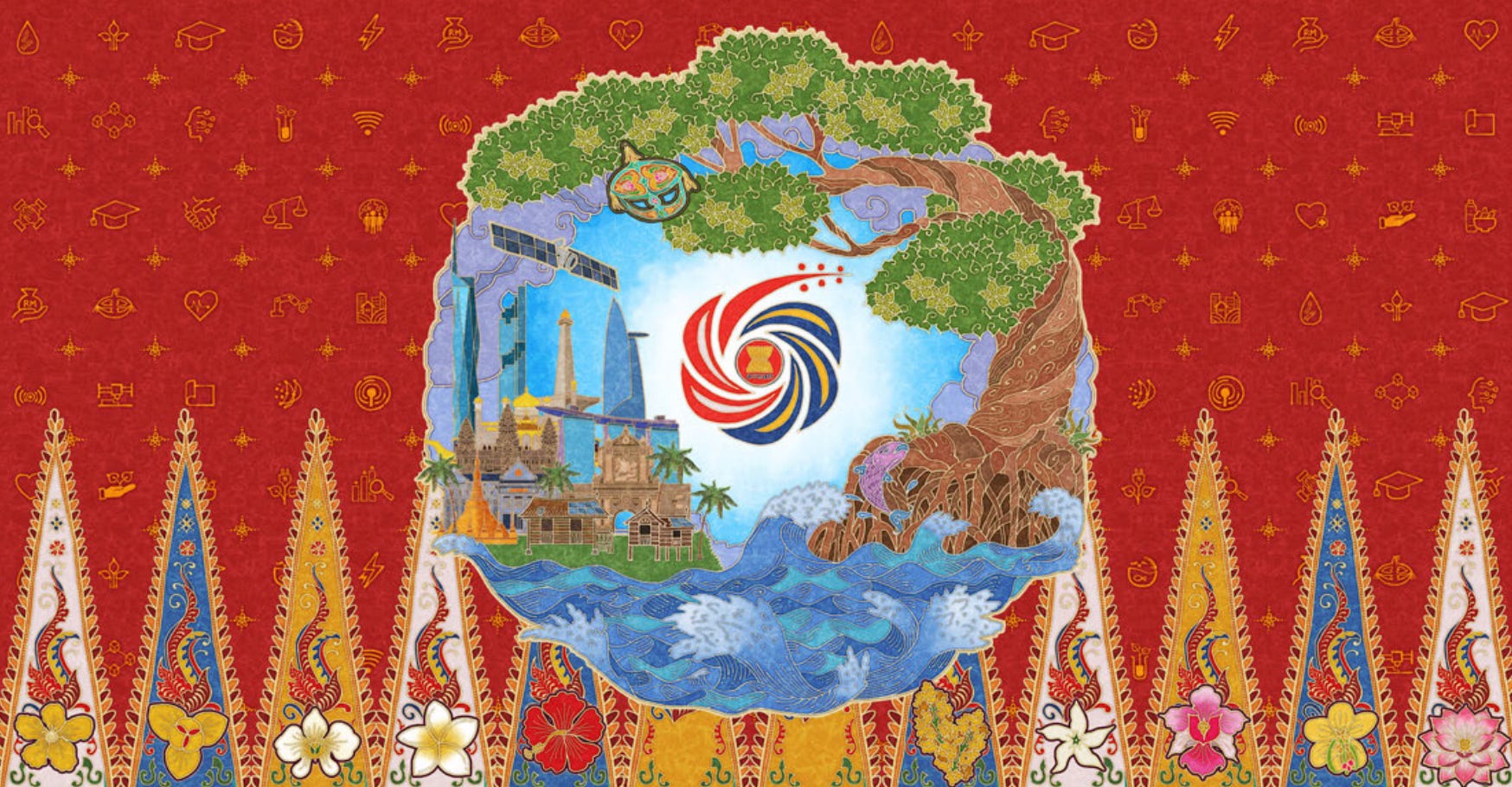
PILLAR ➊
Institutional Foresight
KEYWORDS Anticipatory Governance, State-directed, Structural CommitmentsForesight is a long-term political tool, embedded in Asian governance. China’s recent 15th Five-Year Plan (2026–2030) serves as the world’s largest framework for state-directed foresight, setting the strategic environment for all industries. India’s Viksit Bharat@2047 aims to make India a developed nation by the 100th anniversary of its independence in 2047. Korea’s Institute of S&T Evaluation and Planning demonstrates commitment to embedding foresight in national science and technology planning. The Centre for Strategic Futures in Singapore ensures anticipatory capacity is built across all government agencies. Indonesia’s Ministry of National Development Planning (Bappenas) is strengthening its foresight capability. The Academy of Sciences Malaysia (ASM) uses Envisioning Malaysia 2050 to guide national development. Philippines’s PAGTANAW 2050 envisions a prosperous, archipelagic, maritime nation driven by science and technology.
For a more regional approach, horizon scanning reports such as the new ‘ASEAN Ahead: STI Ecosystem Foresight 2035 and Beyond’ and the ‘Eurasia Development Landscape 2040’ offers inter-Asian and macro-continental perspectives.
This really resonated:
Foresight happens when ideas cross borders, between sectors, between people, between timeframes. It is about weaving. Reading early signs not just as trends, but as threads - threads that, when pulled, might just reveal the shape of what is coming next.
Dubai Municipality

PILLAR ➋
Pop Futures
KEYWORDS Fiction Or Not, Prophetic Predictions, EntertainmentFutures thinking is also manifested in media, pop culture and increasingly, cultural infrastructures like museums. A new sci-fi museum in Shanghai hosts the Three-Body Future Academy, inspired by Liu Cixin’s novel The Three-Body Problem, which integrates science, education, and entertainment. The four-episode Netflix series, “Tomorrow and I,” directed by the acclaimed Paween Purijitpanya from Thailand, marries science fiction with Thai spirituality and cultural identity. Japanese manga 私が見た未来 (The Future I Saw) fuelled widespread social discussion in North Asia, due to perceived prophetic predictions, which has impacted Japan’s tourism, demonstrating the power of futures narratives, fictitious or not, in public consciousness.
「今は、SNSなどでニセ情報を拡散する人々があとを絶ちません。でもむやみに恐れるのではなく、災難や災害に対しては「防災意識」を高めて、日常的に備えておくことは大切だと思っています」
These days, people like to spread false information on social media and other platforms. I believe it is essential to always be prepared and maintain daily readiness against disasters.
竜樹諒 Ryo Tatsuki, Japanese Manga Artist
These are all topics that intrigue us, and we want to pose questions to society about their co-existence with technology in the future. Our goal is to invite viewers to question these concepts.
Paween Purijitpanya
A simulator game by Debbie Ding, a visual artist and technologist from Singapore, that reimagines villages of Malaysia in 1950s based off oral histories and sketches, as a personal memory for her father who was born in Malaysia.
PILLAR ➌
Silkpunk, Spicepunk, Islandpunk
KEYWORDS Plural, Embodied, IngenuityDistinct aesthetic movements such as Silkpunk retools classical East Asian traditions. Spicepunk interrogates colonial trade legacies. Islandpunk focuses on reclaiming local narratives through ecological adaptation. These genres collectively prove that local history and social context are materials for the future. The ‘Another World Is Possible’ exhibition offers a view into these movements, showcasing the work of artists such as Torlarp Larpjaroensook’s (Thailand), Leeroy New’s (Philippines), Debbie Ding (Singapore). The exhibition beautifully concluded with one key message: Futures must be plural, situated, and deeply grounded in local culture, ecology, and place.
Silkpunk novels are about rebellion, resistance, re-appropriation and rejuvenation of tradition, and defiance of authority. The vocabulary of the technology language relies on materials of historical importance to the people of East Asia and the Pacific islands: bamboo, shells, coral, paper, silk, feathers, sinew, etc.
Ken Liu, who coined Silkpunk
What is spicepunk? The word describes a recent-ish wave of speculative fiction and fantastical arts, countering Western(ised) hegemonic modernity with alternative visions anchored in Southeast Asian heritage and history.
Yi-sheng Ng, Singaporean sci-fi author
I draw from the ingenuity and resourcefulness of manila’s urban poor who basically don’t throw things away, instead they transform random objects into decorative pieces for their home, jeepneys, and the half-a-year long Christmas celebrations.
Filipino artist Leeroy New, featured on designboom

PILLAR ➍
Reimagined Urbanism
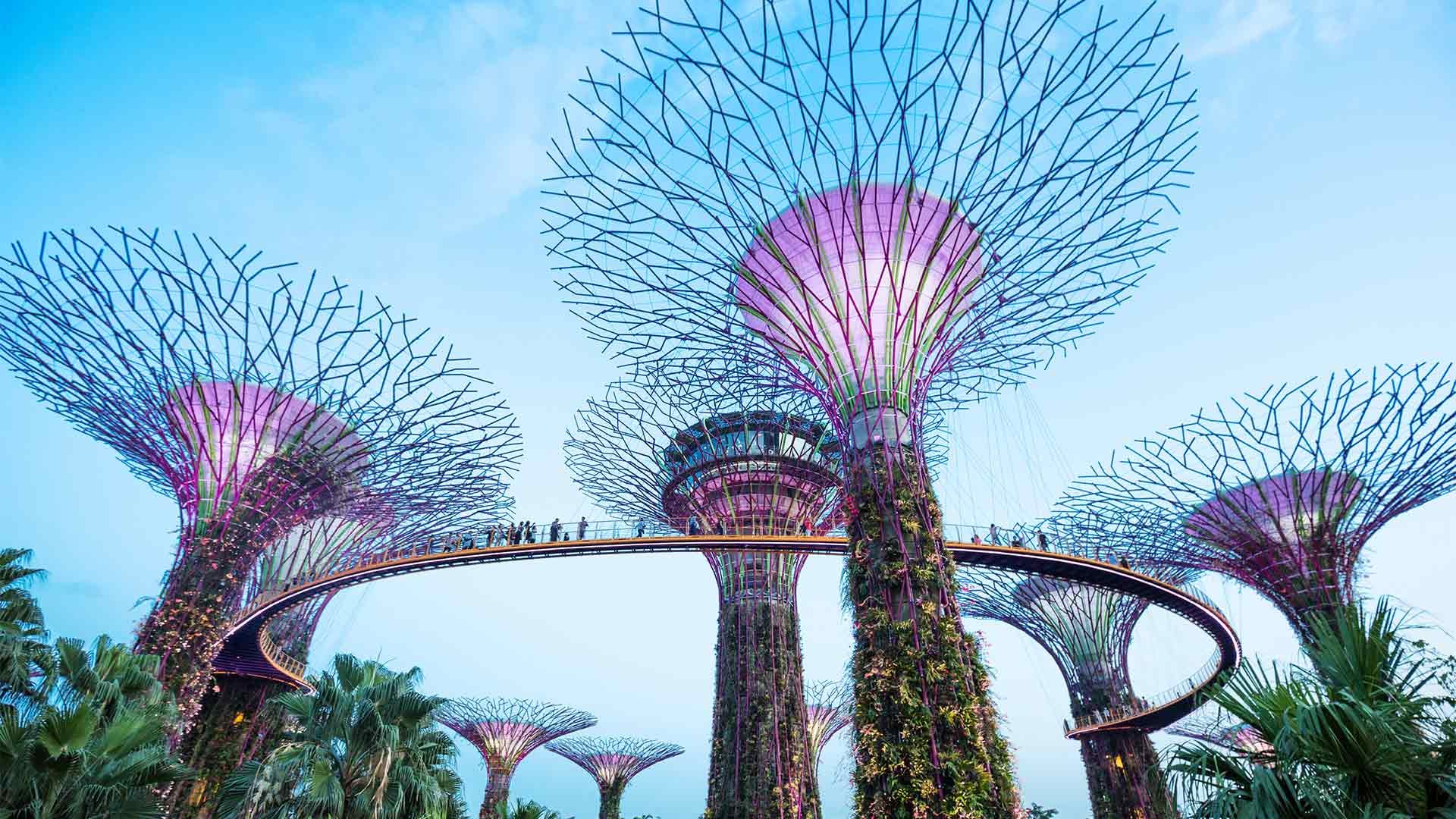
KEYWORDS Aesthetics Politics, Living Laboratory, Pragmatic ResilienceIn the reality of city development in Asia, the visual aesthetic of futuristic urbanism is impactful. Singapore’s Supertree Grove has become the attractive imaginary of Singapore as a “Futuristic Garden City.” This powerful image signals optimism and possibility, acting as an assurance to the public and a persuasive message to global investors. Concepts like Jason Pomeroy’s ‘Float Farm’ reinforce the focus on resilience and food supply. This reveals that Asian foresight is often grounded in pragmatism and survival, solving immediate challenges. China’s expansion of areas for autonomous driving in Pudong, Fengxian, and Minhang demonstrates that the government treats urban policy as a structural commitment to scaling the future. These projects portray Asian cities as living labs, where policy and imagination converge. They are tangible and visible manifestations of Asia’s approach to foresight and its strategic goals.
[The Supertree Grove] has become a flagship image of ‘Solarpunk’: a science-fiction/speculative sub-genre that projects the optimistic possibility of a more habitable world in the face of environmental crisis through the inventive use of technology with respect to nature.
May Ee Wong, ‘Visualising “Asia as Future” through Speculative Southeast Asian Aesthetic Urban Futures’
PILLAR ➎
Ancient Futurism
KEYWORDS Systemic Harmony, Energy Shifts, Practical RhythmsAsian strategic thinking has roots in thousand year old, cyclical frameworks. 易經 (The I Ching = Book of Changes) is an ancient foresight tool from China. The 64 hexagrams of the I-Ching represent all archetypal situations and fundamental patterns of change in the universe and human experience. Its core insight is that the world is a dynamic dance between opposing forces (Yin and Yang). No single force can expand forever without creating a counter-reaction. It teaches systemic harmony and the inevitability of change, positioning foresight not as a singular prediction, but as a continuous reading of energetic shifts.
Traditional agricultural practices, guided by the lunar calendar and 二十四節氣 (solar terms), represent a deep, practical form of anticipatory planning. This knowledge is rooted in observation of natural cycles, dictating planting, harvesting, and daily readiness. It grounds resilience in rhythm, ecology, and daily survival. The cyclical approach to foresight is a crucial distinction from a linear view of time and prediction.
安不忘危,存不忘亡。
While secure, do not forget danger. While existing, do not forget extinction.《周易·系辞》The I Ching
人无远虑,必有近忧。
He who does not think of the future will soon experience crisis.《论语·卫灵公》The Analects of Confucius

PILLAR ➏
Futures Literacy
KEYWORDS Academic Nexus, Community-drivenAsian academia is cultivating futures literacy, ensuring the next generation of leaders are fluent in systems thinking. Institutions like Taiwan’s Tamkang University 淡江大學 has established a regional nexus for the field, publishing thought leadership such as “Asia 2038”. while programmes like “Futures for Public Policy” at the LKY School in Singapore provoke policymakers out of their comfort zones, enhancing their capacity to anticipate and consider the bigger systemic context beyond their immediate domains.
Besides the schools, futures literacy is also promoted through community-driven initiatives, such as China’s Futurist Circle, Seapunk Studios and Asia Pacific Futures Network. Plus, the many other non-English ones from Japan, South Korea, Thailand, Indonesia etc. The second edition of Future Friends in Singapore will focus on bold ideas through the lens of Asia. Grassroots communities like these are also where you find bold, radical, original ideas you cannot easily ask ChatGPT for.
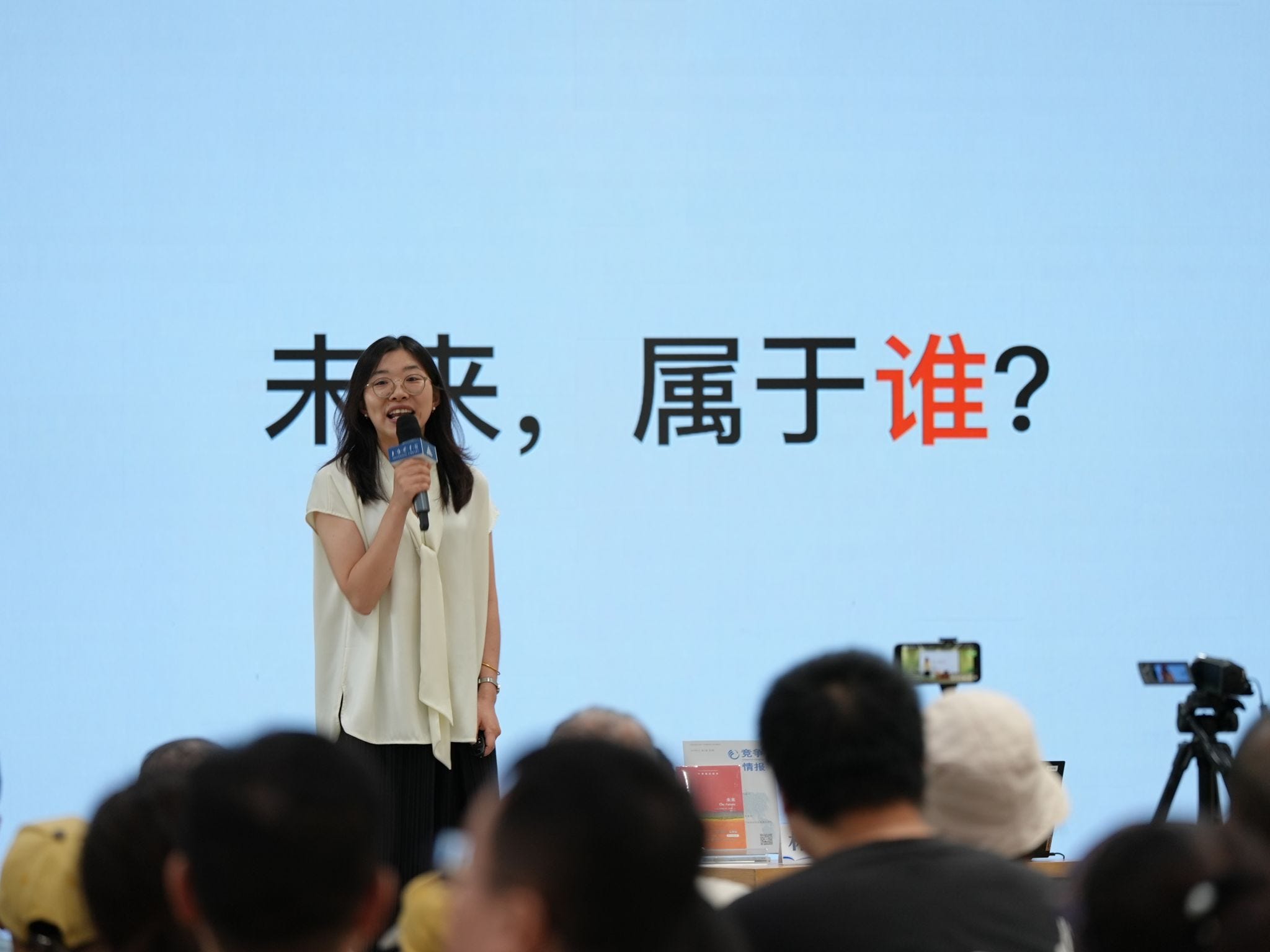
Who owns the future?
未来,属于谁?
To answer this question (as seen on one of Futurist Circle’s events), IMO, it’s those who dare to imagine and re-imagine it ☻
Thanks for reading this far
Reach out for projects, speaking/moderating gigs, mentorship, get togethers or matcha meets!
loved this read!
Insightful references! Thanks,