

When DUMPLING met Future Friends
3 trends in 3 slides in 3 minutes
Last week, something special happened.
I had the pleasure of sharing my 333 (3 trends in 3 slides in 3 minutes) at the very first Future Friends gathering in Asia, held right here in Singapore! Here’s what I talked about, including contextual details I did not get to share within the 3 minute time limit!
All opinions expressed are solely my own ☻ Reach out to me if anything resonated!
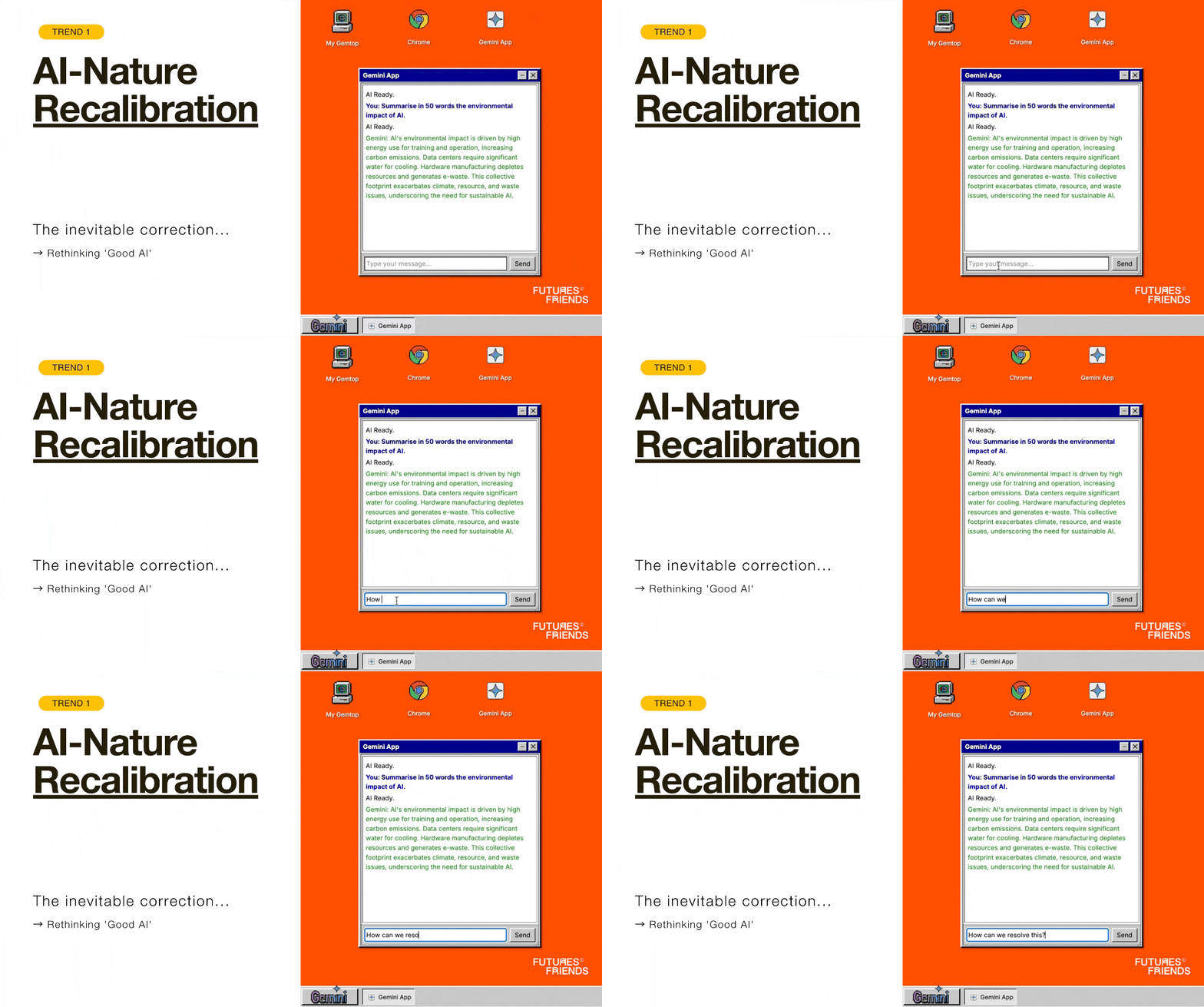
1. AI-Nature Recalibration
I started off with an idea that was sparked by my recent study of the I Ching (…these days I get a lot of inspiration not from modern media, but from super old texts like this ancient Chinese Book of Changes ☻ But still it’s fun reading how people are describing I Ching on Reddit though). What’s shocking is, the wisdom from a 2000+ year old book can feel startlingly relevant. I Ching talks about, the world is a dynamic dance between opposing forces (aka yin and yang - I’m glad there’s an emoji for this ☯️). The core insight is that no single force can expand forever without creating a counter-reaction. All actions have consequences, and eventually, the system finds a way to restore balance.
For a long time, the tech world seemed to have operated as if it were exempt from this rule. The AI boom and the resulting surge in energy and water consumption by new large-scale models has made this imbalance impossible to ignore. This is why the first and most critical trend is my prediction of an AI-Nature Recalibration — the inevitable correction to restore this balance. We’re starting to see its manifestations in calls for mandatory AI resource audits and new benchmarks that measure performance not just by speed, but by environmental impact. This trend is a call to redefine what 'good AI' means, embedding sustainable metrics into its very core to create a systemic harmony between our creations and our planet.
For the curious, here’s an insightful interpretation of the methodology of the I Ching from the School of Philosophy of China’s Nanjing University (I love this):
1. Mutual implication of Yin and Yang, which keeps wholly harmony in the process of generating.

2. Mutual generating of Yin and Yang, which begins a new circle of generation and regeneration after an old one finished.

3. Mutual assistance of Yin and Yang - without any one of them, the process of transformation is impossible.

4. Dynamics of Yin and Yang forms the rhythm of life, which presents various ways - evolution of one and declination of another.

5. Integral balance between Yin and Yang, which implies local instability forever.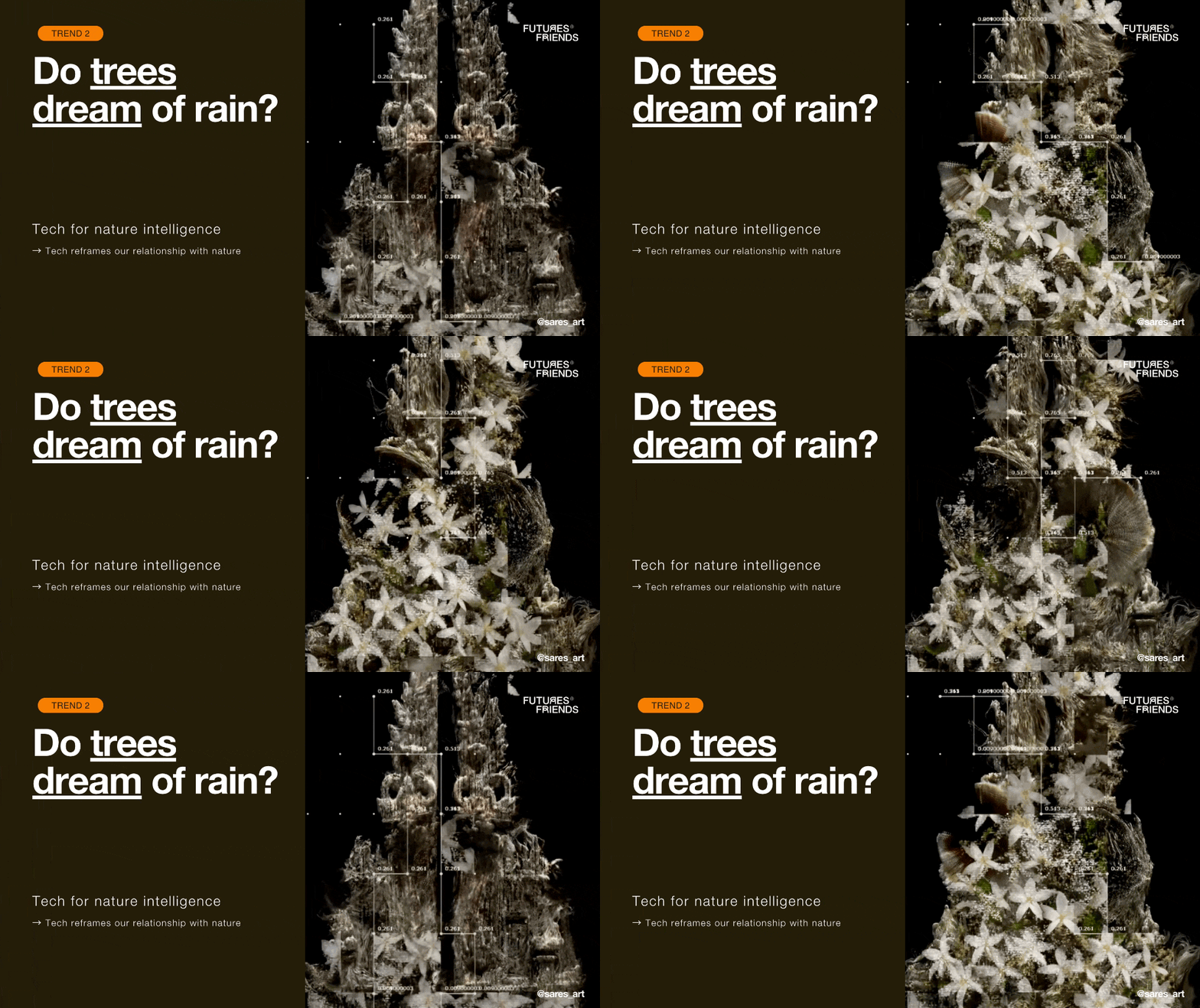
2. Do Trees Dream of Rain?
If the first trend is about acknowledging technology's debt to nature, this next one is about how it could help us repay it. In case you didn’t get it (lol), the title for this trend is a play on the sci-fi novel, Do Androids Dream of Electric Sheep?. Instead of asking if machines can become more like human, this trend explores if technology can help human become more connected to nature.
It points to a future where we use technology not for productivity, but for a more considered way of living. This is happening because of a convergence of AIoT (artificial intelligence of things – I am currently tracking movements at the Asia New Bay Area for this kind of innovation ⚡️) and our urgent need for 'nature intelligence'. We’re seeing it manifest in 'smart parks', like the 'Intelligent Garden' project in London from Avanade and Microsoft, where technology allows for direct interaction with the park's ecosystem.
The implication is profound, especially for Singapore. Lee Kuan Yew’s vision of a 'Garden City' back in 1967 was genius. Can this trend be an evolution of that vision — using smart nation capabilities to deepen human connection to the very greenery that defines Singapore? Can technology reframe our relationship with nature, and make us more attentive to the world around us?
And finally…
3. Lychee Girl
The previous era’s narrative was about fighting back (see: SKII’s ‘leftover women’ campaign in 2016). That era was defined by ‘fighting back’ against a negative label. It was a necessary, defiant battle.
But for the 'Lychee Girl', the focus is different.
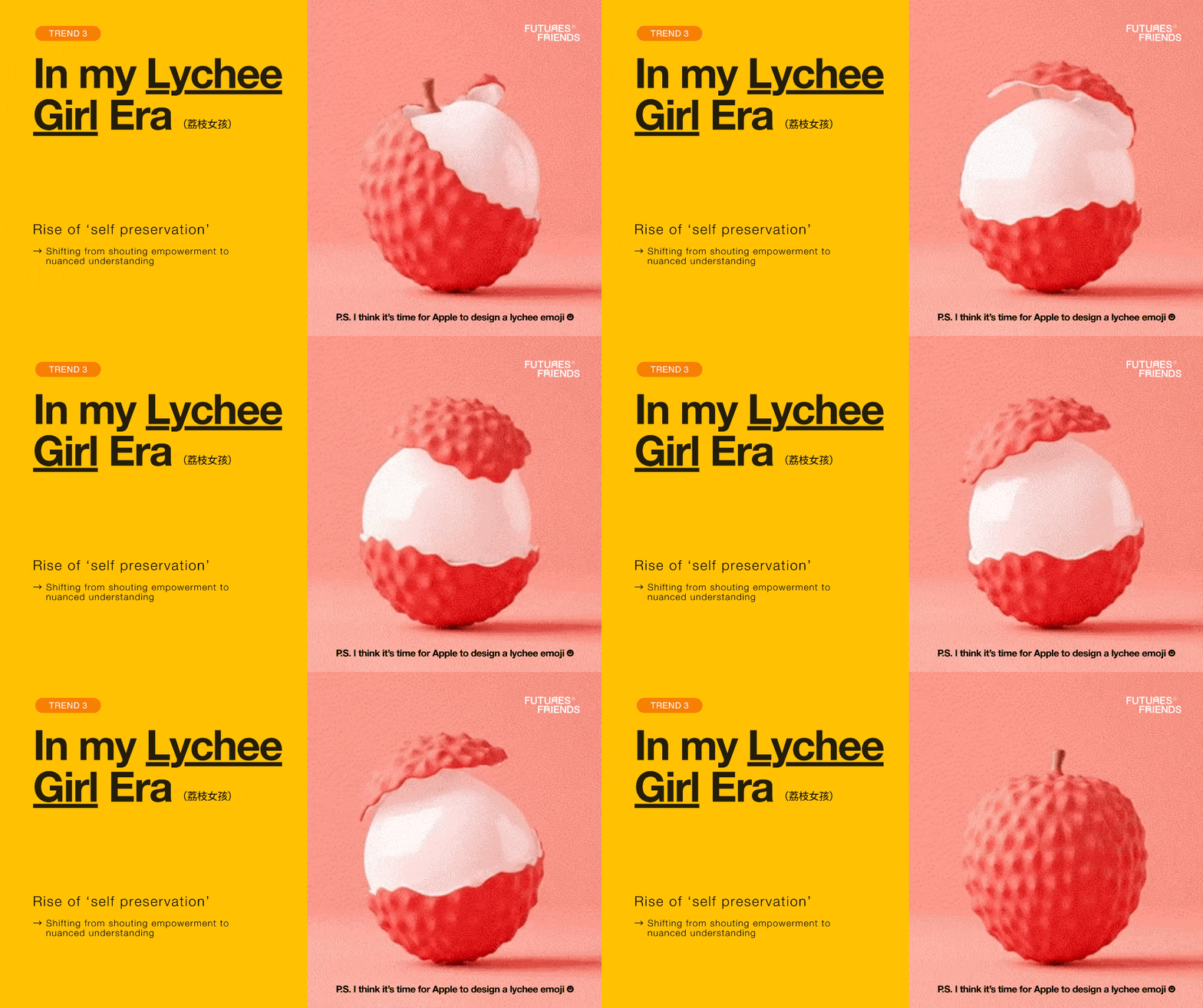
I noticed a powerful cultural archetype emerging from China: the core idea is the focus on ‘self-preservation’. Borrowing the term ‘Lychee Girl’ from this campaign by Chinese indie beauty brand DDG who launched a lychee line, the analogy is perfect: a hard, resilient outer shell protecting a sweet and vulnerable inner core.
This shift is happening as continued socio-economic competition meets an evolving female consciousness, and we see it manifested in the rise of more nuanced portrayals of ‘quiet ambition’. The implication is that emotional allyship is shifting from shouting empowerment to nuanced understanding. The focus is no longer on proving her worth to the world, but on preserving her inner self within it. It’s a quiet evolution from fighting back to internal peace. I’m excited to see how this evolves in China.
On a very serious note: I think it’s time for Apple to design a lychee emoji!! ☻
DDG said it rather beautifully (it’s definitely going to be lost in translation but use AI to translate this) –
在日复一日的奔波里
我们最想要守住的
其实是简单直接的快乐
不计后果的勇气
与对这个世界最本真的好奇

像一颗荔枝一样
——清甜如内,坚韧如外
在追逐理想的路上
让果实和它的铠甲一起生长

以一颗荔枝为灵感
我们特别拍摄了此条短片
献给每一位追逐理想自我的“荔枝”甜心们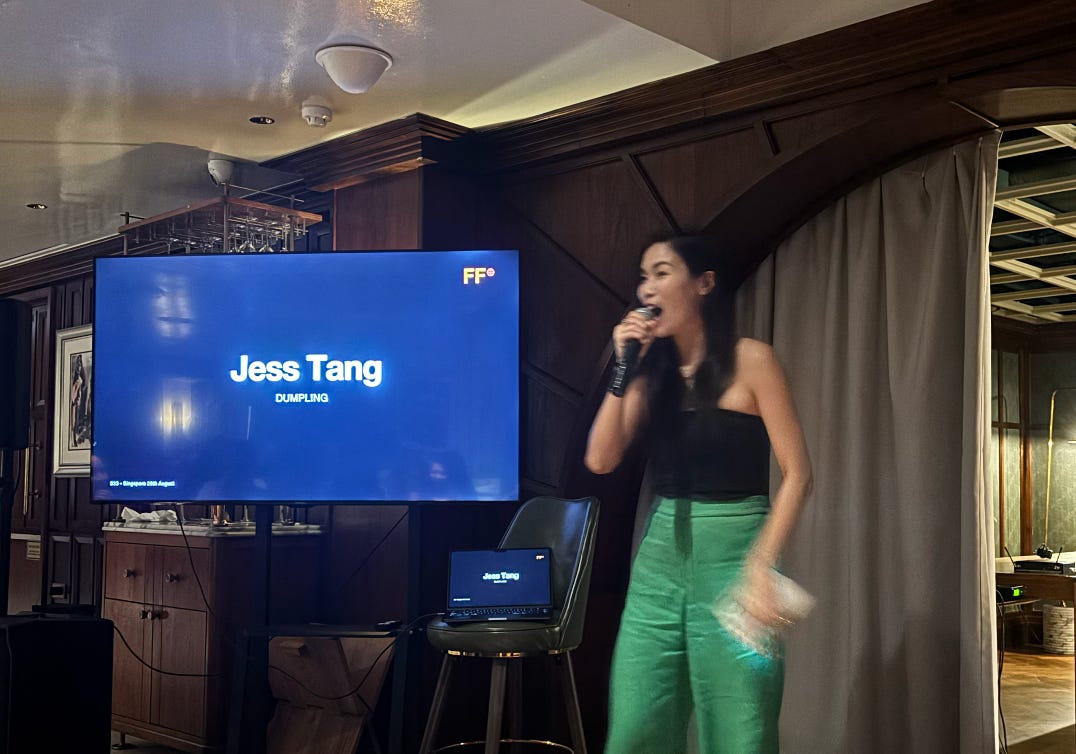
Thanks again Futures Friends (Sarah and Agalia!!) for the kind invitation to share my 333!
Last but not least, super happy to have shared the stage with these brains:
Michael Sagna, Insights Lead, Deloitte Center for the Edge Southeast Asia
Agalia Tan, Senior Strategist at We Are Social
Marc Braydon, Head of Marketing & Programming, The Mandala Group
Komal Mirani, Founder, The Nuance Network
Evgenia Papageorgiou, Part strategist, part cultural translator
Mark Pollard, Strategy Friend, Sweathead
Jevon Chandra, Foresight Analyst, Centre for Strategic Futures
Love your 333 😊
This project isn't AIoT as such, but I think you'd love to know about it as it does do along the same lines! https://www.re-tv.org/articles/freetownthetreetown